56. What I Learned Celebrating Christmas Abroad as an Expat Family
Holidays have a way of holding memory, emotion, and expectation all at once. For many families, Christmas and New Year are anchored in familiar rituals: the same homes, the same meals, the same people around the table year after year. But when life unfolds across borders, cultures, and time zones, those traditions inevitably shift.
After living abroad for 14 years, Monica Virga Alborno has learned that holiday magic doesn’t arrive simply because the calendar says December 25. It isn’t guaranteed by decorations, schedules, or even geography. It’s something that must be created, through presence, intention, ritual, and the people willing to meet one another where they are.
This year, that lesson feels especially alive.
With her sister in France expecting her first baby any day, her parents navigating health challenges in the U.S., and her own family settled in Norway, there’s a real possibility that Christmas will be spent across three different countries. It’s not the first time distance has shaped the season, but it’s a reminder of how fluid and fragile togetherness can be.
And yet, this season doesn’t feel empty. It feels tender. It feels like an invitation to soften expectations, release control, and remember what truly makes the holidays meaningful.
Growing Up With Traditional Christmas Magic
Monica grew up in northern New Jersey, surrounded by deeply rooted holiday traditions. Christmas Eve meant church, candlelight services, and time spent with her maternal grandfather. Christmas morning brought Santa, familiar rituals, and the excitement that so many American families recognize from holiday movies.
Christmas Day was spent with her father’s side of the family, where her grandmother, a 20-year Disney cast member, brought an unmistakable sense of magic. There were decorated trees, carefully placed details, and a house filled with cousins, laughter, and noise. Over time, those gatherings grew larger, with dozens of grandchildren and great-grandchildren filling the space.
Those years created a strong internal blueprint for what Christmas was “supposed” to look like: big family meals, shared stories, familiar homes, and a sense of continuity.
But life doesn’t always follow the blueprint.
The First Holiday Away: Learning That Magic Isn’t Automatic
At 24, Monica moved abroad to begin a global career, starting in Kuwait. That first Christmas away from home was spent working on an oil rig in the desert, surrounded by people who didn’t celebrate Christmas at all.
December 25 arrived like any other day.
There were no traditions, no pause, no collective acknowledgment of the holiday. A makeshift Christmas meal at a roadside restaurant with a colleague she barely liked replaced everything she associated with the season. On New Year’s Eve, she worked through midnight, briefly acknowledging the moment before returning to the job.
It wasn’t very pleasant, but also clarifying.
That experience planted a realization that would shape every holiday afterward: a date on the calendar doesn’t make a day meaningful. You do.
Reinventing Traditions Across Continents
Over the years, holidays took many forms. Some years, Monica could fly home. Other years, work schedules made it impossible. Her family adapted to celebrating Christmas early, late, or on entirely different days. Trees stayed up longer. Gifts were opened weeks later. The meaning stayed intact, even as the structure changed.
Technology became a bridge. FaceTime calls connected families across time zones. Handwritten letters and holiday cards offered a slower, more tangible form of connection. Voice notes and video messages allowed relationships to stay alive even when schedules didn’t align.
These adaptations revealed something quietly powerful: traditions don’t disappear when they change. They evolve.
Finding Family Where You Are
One of the most formative holiday experiences came during Monica’s years living in Angola. New Year’s Eve was spent on a rooftop with coworkers, people from 20 different countries who jokingly referred to themselves as “the UN.”
Everyone brought something to grill. Everyone shared drinks, stories, and laughter. These colleagues became family, not because of blood, but because of proximity, shared experience, and care.
That season taught her that family isn’t only inherited. It can be built.
And those bonds remain meaningful long after people scatter across the globe.
Slow Living and Holiday Simplicity in Norway
Since 2018, Norway has been home. Here, the holidays are slower. Simpler. Quieter.
Sometimes Christmas is spent at a cabin in a ski town, playing board games, walking in the snow, and sitting together without an agenda. Stores close for days. Work pauses. Boundaries are protected.
There’s less emphasis on decoration and excess, and more focus on presence.
Norwegian holiday culture reinforced something Monica had already begun to feel: simplicity creates space for connection.
Raising Children in a Blended, Multi-Faith Home
Celebrating Christmas now looks different, not only because of geography but also because of family structure. Monica’s husband, Ziad, is Muslim. He didn’t grow up celebrating Christmas, and their children are being raised in a home that honors multiple traditions.
Rather than enforcing a single narrative, the family shares the stories behind holidays, Christian traditions, cultural folklore, Santa, St. Nicholas, Norwegian Nisse, and the universal themes of generosity and light.
The focus isn’t on religious obligation, but on meaning, storytelling, and togetherness.
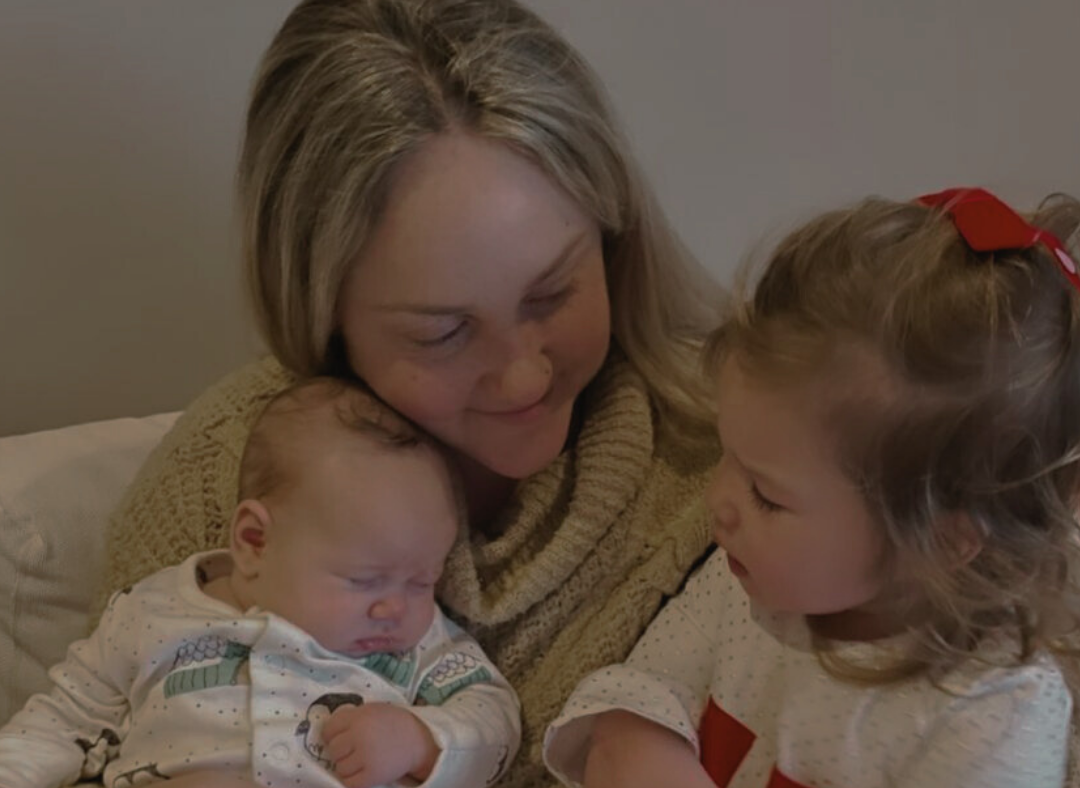
Picture of Monica and her family.
Creating Rituals That Travel With You
Some traditions remain constant, even when locations change. One is reading The Night Before Christmas every Christmas Eve. Multiple copies of the same book exist across households and countries, so the ritual can happen simultaneously, even when families are apart.
These shared rituals, small, intentional acts, become anchors across time and space.
They remind everyone that connection isn’t limited by distance.
Letting Go of Perfection
Living abroad has taught Monica that holidays don’t need to look perfect to feel good. Expectations soften. Traditions loosen. Control fades.
And in that release, something more honest emerges.
The holidays don’t need to be elaborate. They don’t need to be expensive. They don’t need to match a picture from the past.
They need to feel warm. Connected. Real.
Whether surrounded by loved ones or holding them in mind from afar, the invitation remains the same: make the magic yourself.
Final Thoughts
After 14 years of celebrating holidays across continents, cultures, and seasons of life, one truth remains steady: meaning isn’t found in sameness. It’s created through intention.
As families grow, move, change, and grieve, the holidays will inevitably look different. And that doesn’t diminish them—it deepens them.
When expectations loosen, when rituals are chosen with care, and when presence becomes the priority, the magic doesn’t disappear. It simply takes a new form.
Wherever this season finds you, together or apart, rooted or in transition, there is room to create something that feels true.
Quotes from the Episode
“Holiday magic doesn’t just happen because a date on the calendar arrives. You have to make it.”
“You can find family anywhere.”
“It’s okay to let some things go that don’t have to look so great—just keep what you want.”
“The people you’re with are what really make it.”
“I just want the holidays to feel good and fun.”
Want more episodes like this? Listen to The Wand(HER)wild Podcast and connect with our community over on Instagram @wandherwild or through our digital events at wandherwild.com and retreats at wanderwildfamilyretreats.com.