58. Inside a Winter Mother–Child Retreat: A Behind-the-Scenes Look
Hosting a mother–child retreat is not a single moment or a weekend experience. It is weeks of preparation, layers of coordination, and dozens of small, unseen decisions that exist so that, once families arrive, they don’t have to make any at all.
In this solo episode of The WandHERwild Podcast, Monica Virga Al Borno offers a rare, honest look behind the scenes of a Winter Mother–Child Retreat. Recorded in the weeks leading up to the upcoming February gathering in the Hudson Valley, the episode walks listeners through what it actually takes to hold a space that feels calm, grounded, and deeply supportive for mothers traveling solo with their children.
This is not a highlight reel. It’s a transparent look at the labor, logistics, and care that allow mothers to arrive, exhale, and simply be.
What Happens Before Anyone Arrives
Preparation begins four to six weeks before the retreat itself. At this stage, the work is not visible to guests, but it is foundational.
Guest communication is the first layer. Each mother receives detailed arrival information, packing lists, childcare preparation guidance, and environmental notes designed to help families travel lightly — physically and mentally. There are no assumptions that mothers will “figure it out.” The intention is clarity before arrival, so nervous systems can soften in advance.
Information collection follows. Dietary needs for both mothers and children are gathered and shared directly with the retreat chef. Child preferences, sensitivities, sleep needs, and support requests are logged carefully. Each family is treated as a unique constellation, not a generic booking.
Internally, the team creates confidential guest profiles — a kind of digital index card — so that staff can arrive already attuned. Knowing names, faces, arrival times, room assignments, and small personal details allows the retreat to feel personal without being intrusive.
This phase is about listening before anything begins.
The Role of the Retreat Team
A mother–child retreat is never a solo effort. By the time guests arrive, a team of eight to nine people is already holding the container.
The team includes childcare leads, wellness facilitators, a chef, support staff, and logistics coordination — all working in rhythm. Many live in different places and only come together a few times a year, which makes communication and structure essential.
Before the retreat, schedules are finalized, roles clarified, contingency plans reviewed, and risk management protocols refreshed. Team members know when they are supporting guests, when they are resting, and when they are off-duty — because sustainable holding requires sustainability for those doing the holding.
This care extends inward as well as outward.
Arrival Day: Setting the Tone
On the first morning, the retreat team arrives early — long before guests. A trailer filled with retreat essentials is unloaded: yoga mats, bolsters, children’s gear, pack-and-plays, slumber pods, high chairs, art supplies, books, toys, blankets, outdoor equipment, safety adaptations, and thoughtful extras like spare hats, gloves, toothbrushes, and diapers.
The estate itself is adapted carefully. Fragile items are removed. Electrical outlets are covered. Spaces are styled to feel warm and beautiful while remaining child-safe. Nothing is precious. Everything is intentional.
Welcome bags are placed in rooms. Tables are set. Cozy corners are created. The goal is not perfection — it’s ease.
When guests arrive later that afternoon, they are greeted into a space that already feels held.
The Rhythm of the Retreat
The retreat unfolds over four days, with days two and three forming the heart of the experience.
Mornings begin slowly. Breakfast is communal and unhurried, often near a roaring fire. There is space for conversation, quiet, and children settling into the day at their own pace.
Childcare is offered in gentle, intentional blocks — two hours in the morning and two in the evening. Children spend time outdoors, explore nature, create art, move their bodies, visit animals, and engage in sensory play. The program is structured but soft, allowing children to feel secure without being overstimulated.
While children are cared for, mothers attend wellness sessions designed specifically for wintering in: yin practices, Pilates fusion, breathwork, and grounding circles. Movement is supportive rather than demanding. Stillness is welcomed.
One of the central rituals is the cacao circle — a shared space where mothers are invited to speak honestly about the season of life they’re in. There is no fixing. No advice. Just presence.
Meals are earth-to-table, seed-oil-free, sugar-free, and deeply nourishing. Comfort food is offered with intention. Children’s needs are honored without compromise. Mothers do not have to think about what’s next.
Free time is built into every day. Naps are encouraged. Wandering is welcomed. Nothing is compulsory.
Evenings bring shared dinners, cozy movie nights, childcare-supported mom-only circles, and early rest. Most nights end by 9:30 or 10. Winter asks for sleep, and the retreat honors that.
Holding Space for Mothers Traveling Solo
Many mothers arrive alone with their children. The retreat is designed with this reality at its center.
Traveling light is supported through on-site gear. Decision fatigue is reduced through clear schedules and thoughtful transitions. Childcare is reliable and predictable. Emotional labor is shared.
Mothers are still parenting — but they are not carrying it alone.
Behind the scenes, staff rotate breaks, rest, eat nourishing meals, journal, walk outdoors, and check in with one another. Holding others requires being held, too.
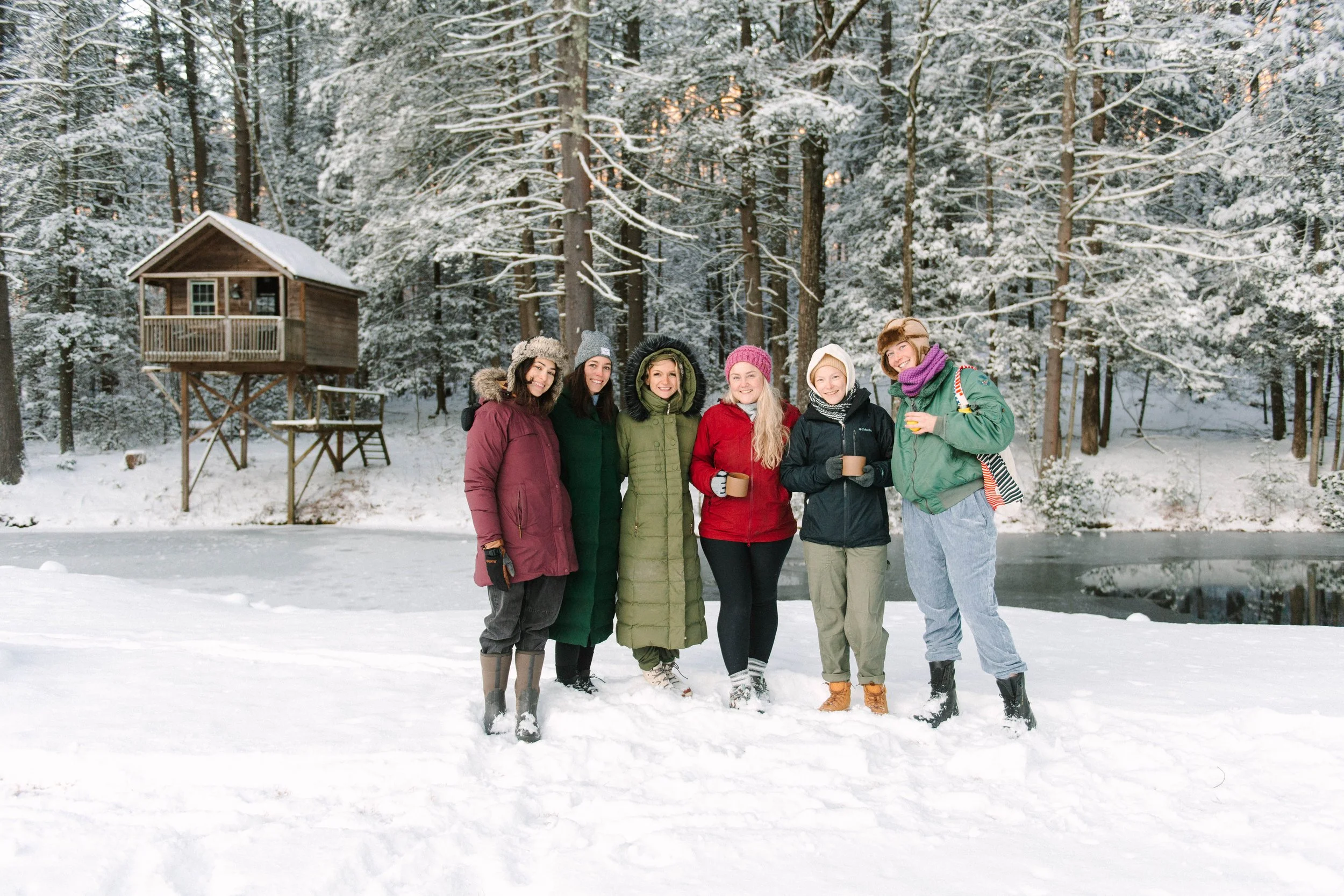
Picture of a Winter Retreat.
Departure and Integration
The final morning is gentle and practical. Breakfast is earlier. Packing support is offered. Cars are cleared of snow if needed. Children are engaged while mothers load vehicles.
There is often a final shared ritual — a sound journey, a quiet circle, or a reflective moment that brings mothers and children together.
Before departure, the team gathers lessons learned, notes inventory needs, and documents what worked well. Feedback is welcomed but not extracted. The retreat is offered as an experience — not a performance.
By early afternoon, the estate is reset, the trailer repacked, and the team disperses.
Why This Matters
What makes a retreat feel nourishing is rarely what’s visible. It’s the thought given to reducing friction. The intention behind spacious scheduling. The care taken to protect nervous systems — both guest and staff.
This episode offers insight not just into a specific retreat, but into how supportive spaces are built at all.
Final Thoughts
A winter mother–child retreat is not an escape from motherhood. It is a deepening of it — one rooted in presence, shared responsibility, and intentional design.
By tending to the unseen labor, the mental load, and the emotional realities mothers carry, the retreat creates something rare: a place where mothers don’t have to hold everything.
They are allowed to arrive exactly as they are.
Quotes from the Episode
“We are taking the decision fatigue from you as much as we can.”
“This isn’t a highlight reel — it’s the care, coordination, and thoughtfulness that makes ease possible.”
“You’re still mothering, but you’re not carrying it alone.”
“Winter asks us to slow down, to winter in, and we design the retreat to honor that.”
“What makes a space feel supportive is often what no one sees.”
Want more episodes like this? Listen to The Wand(HER)wild Podcast and connect with our community over on Instagram @wandherwild or through our digital events at wandherwild.com and retreats at wanderwildfamilyretreats.com.