59. Intuitive Parenting: 7 Things I Do When I Doubt Myself
Self-doubt is a quiet companion for many mothers. It shows up in the pauses between decisions, in the moments after a hard day, and in the questions that linger long after the house has gone quiet. Even the most intentional parents find themselves wondering: Am I doing this right?
In this solo episode of The WandHERwild Podcast, Monica Virga Alborno offers an honest, lived reflection on intuitive parenting and the anchors she returns to when self-doubt creeps in. Recorded from the floor of her daughter’s bedroom, the conversation is intentionally unpolished and deeply human. It moves away from rigid parenting frameworks and instead invites mothers back into trust, observation, and inner knowing.
Rather than offering a formula, Monica shares what intuitive parenting looks like in practice inside her own home — especially as a mother raising children within a culturally blended family, navigating information overload, and learning to soften perfectionism.
This is not a conversation about getting parenting “right.” It’s about remembering that there is no single way to raise children — and that intuition, when honored, can be one of the most reliable guides we have.
Why Intuitive Parenting Became Her Anchor
Before naming intuitive parenting as her path, Monica reflects on the two dominant approaches that many parents encounter today: traditional, rule-based parenting and newer, conscious or gentle parenting models. Both offer structure and insight, yet neither fully captures what she needed in the day-to-day reality of motherhood.
What she noticed instead was the sheer volume of advice — books, apps, influencers, AI tools, and well-meaning experts — all offering answers that often conflicted with one another. Rather than bringing clarity, this abundance of information sometimes created more confusion.
For Monica, intuitive parenting became a third path. One not rooted in rules or trends, but in listening to her body, observing her children deeply, and making decisions that felt aligned inside — even when they didn’t fit neatly into a labeled approach.
“I’m not using AI. I’m not looking at influencers online. I’m not using an app. I tend to feel into it — what does my body feel when I look at my kids?”
Living in Norway, parenting alongside a partner from Saudi Arabia, and raising children with American roots, Monica found that a rigid framework simply didn’t make sense. Cultural blending required flexibility, discernment, and trust in what felt right for this family.
1. Remembering That Her Children Chose Her
When doubt arises, the first place Monica returns is a deeply personal belief: that her children chose her as their mother.
This idea isn’t about perfection or destiny in a romanticized sense. It’s a grounding reminder that motherhood doesn’t require flawlessness to be meaningful or supportive.
“My babies chose me to be their mother — me with all of my flaws, all of my gifts, all of my uniqueness.”
In moments of uncertainty, this belief softens self-judgment. It allows space for mistakes, growth, and repair — without questioning worth or belonging.
2. Observing and Listening Without Rushing to Fix
Every child is different. Monica emphasizes that no two children can be parented with the same set of instructions — even within the same family.
Rather than reacting quickly or applying external advice, intuitive parenting invites parents to observe and listen first. This kind of attention takes time. It requires slowing down in a world that often pushes urgency.
“By observing and listening, you can get to know your kids on a much deeper level — and it does take time.”
This practice becomes especially important when self-doubt appears. Instead of searching for answers elsewhere, Monica returns to curiosity: What is my child showing me right now?
3. Allowing Children to Be Teachers Too
Parenting often places adults in the role of guide, protector, and decision-maker. But Monica reminds listeners that children also teach — if parents are willing to notice.
Friction points, emotional reactions, and repeated challenges often reveal something deeper. They can highlight areas where healing, patience, or reflection is needed on both sides.
“There are parts where you have friction with one another — and those are parts that are trying to tell you something.”
Intuitive parenting doesn’t require having all the answers. It invites humility and openness to learning alongside children.
4. Using Non-Mainstream Tools for Deeper Insight
While Monica avoids mainstream parenting apps and AI tools, she openly shares her appreciation for non-mainstream frameworks that focus on individuality rather than behavior control.
Astrology, natal charts, synastry, and human design have offered her language and insight into her children’s inner worlds — how they process emotions, relate to others, and move through life energetically.
“It gives you permission to be who you’re supposed to be — and to understand your child on a deeper level.”
For Monica, these tools don’t replace intuition. They support it by validating patterns she already senses through observation and relationship.
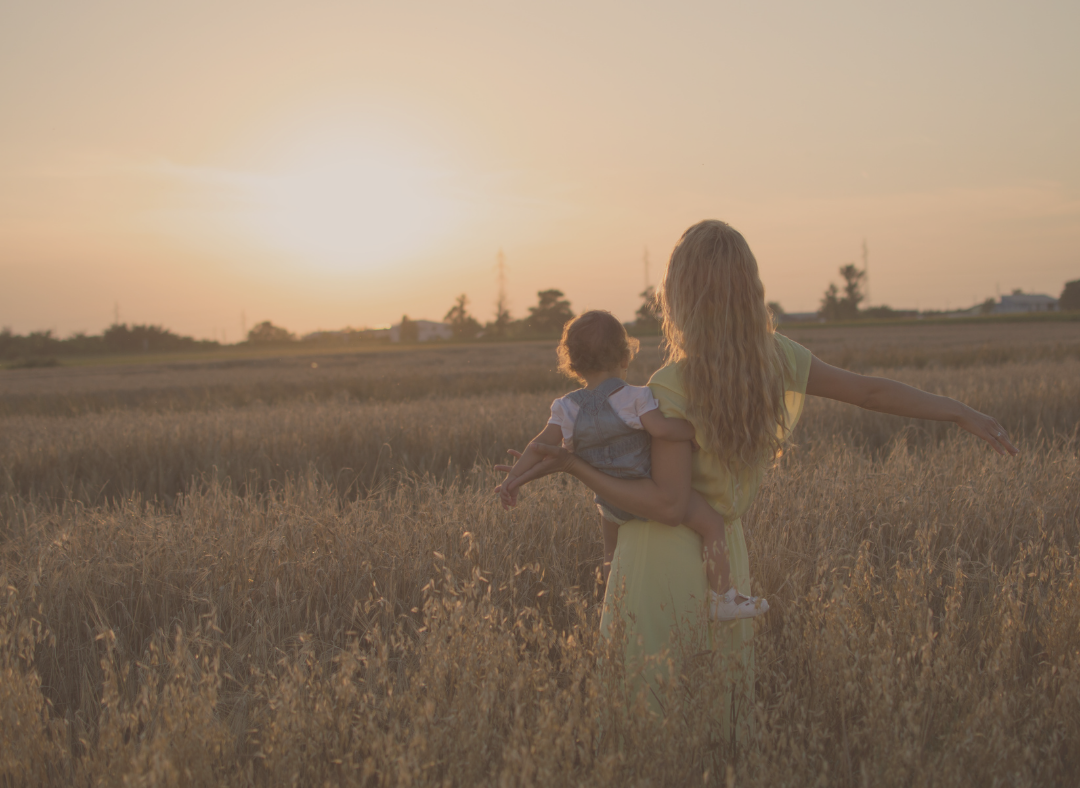
Picture of a mother and her daughter in her arms.
5. Making Mistakes — and Repairing Them
One of the most grounding reminders Monica returns to is this: mistakes are inevitable.
Parenting gurus often present polished narratives of calm reactions and perfect responses. Real life looks different. Intuitive parenting allows for rupture — and prioritizes repair.
“It’s not about never getting it wrong. It’s about having humility, apologizing, and mending the relationship.”
Saying “I was wrong” becomes a powerful act of connection rather than failure.
6. Sitting With Big Decisions Instead of Rushing Them
From school choices to childcare timing to major life transitions, parenting is full of big decisions. Monica encourages parents to sit with these choices rather than rushing to conclusions based on external timelines or pressure.
“It’s okay to sit with decisions in your body and give yourself space to reflect.”
Intuition often needs quiet and time — not urgency — to speak clearly.
7. Returning to Mindfulness and the Womb Space
The final anchor Monica returns to is mindfulness — specifically connecting to the body and the womb space as a source of intuition.
She describes this space as a “dark cave of wonders,” a place of deep knowing that exists beyond logic and comparison.
“The womb space is the home of our intuition.”
Through meditation, visualization, or moments of stillness, Monica reconnects with this inner guidance — allowing clarity to surface naturally, sometimes immediately, sometimes later.
Intuitive Parenting as a Living Practice
Intuitive parenting, as Monica describes it, is not a fixed method. It’s a living relationship between parent, child, body, and inner knowing.
It allows room for culture, evolution, mistakes, and softness. It doesn’t eliminate doubt — but it offers a way to meet doubt with compassion rather than fear.
“I get a gut feeling when things are on or off — and it’s working for me.”
Final Thoughts
Parenting will always come with questions. Self-doubt doesn’t mean something is wrong — it often means something matters deeply.
This episode serves as a reminder that mothers don’t need more rules, apps, or external validation. They need permission to trust themselves again.
Intuitive parenting is not about doing everything right. It’s about coming back to presence, listening more than reacting, and remembering that you are already equipped for the role you hold.
For mothers feeling overwhelmed, conflicted, or unsure — this conversation offers reassurance that your inner voice is still there, waiting patiently to be heard.
Quotes from the Episode
“My babies chose me to be their mother — with all of my flaws and all of my gifts.”
“By observing and listening, you can get to know your kids on a much deeper level.”
“There are parts where you have friction with one another — and those are parts trying to tell you something.”
“It’s okay to make mistakes. What matters is how you repair.”
“The womb space is the home of our intuition.”
Want more episodes like this? Listen to The Wand(HER)wild Podcast and connect with our community over on Instagram @wandherwild or through our digital events at wandherwild.com and retreats at wanderwildfamilyretreats.com.